
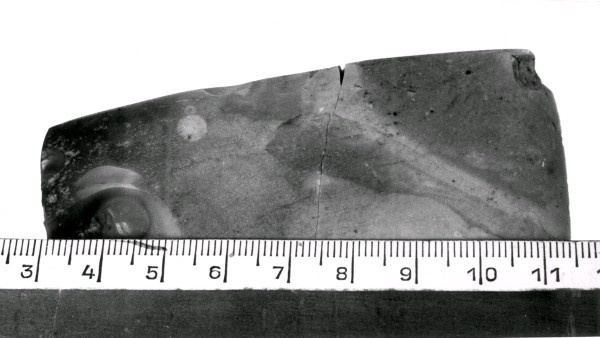
 Foto: Sörmlands museum (PD)
 Proposal for a due diligence process
A detailed proposal for such a process, from policy development and documentation review to decision-making and subsequent action, is presented below.
Policy and preparations
- Develop a clear policy: All cultural heritage institutions should have a policy governing their due diligence efforts. See the policy development support for more information.
- Staff training: Responsible employees must have a knowledge of relevant laws, conventions and industry standards.
- Communicate guidelines: Inform sellers, donors and lenders that you will acquire objects only after due diligence has been completed.
- Time-critical situations: Have procedures in place for rapid action: at auctions, for example.
- Risk assessment: Identify, document and communicate risks linked with object categories or specific situations.
1. Initiation of a case
- Begin investigation: An investigation often begins when the organisation is considering a purchase, receives an offer of a donation or identifies the need to borrow objects for an exhibition.
- Document the case: Gather all information and documentation in one case system. Keep letters, emails, phone calls, meeting notes and assessments.
- Appoint a responsible officer: Appoint a responsible officer and contact person to ensure that the process is implemented in accordance with established policy.
2. Review of documentation and provenance
- Verify ownership and provenance: Ask the seller, donor or lender for evidence that confirms the ownership and origin of the object. The statement on the provenance of the object must be supported by documentation.
- Identify gaps: Evaluate the documentation and note any gaps that need to be filled. In many cases, documentation to confirm all previous stages of ownership will not be available. This is natural and does not necessarily mean that the object is unlawful.
- Examples of relevant documentation:
- Customs documents (export and import licences) o Proof of ownership (such as wills or invoices).
- Photographs, letters, field notes or scholarly studies.
- Auction and exhibition catalogues.
- Check for any restitution claims: Some objects may have previously been subject to a claim by another party. Ensure that no such claims are pending.
3. Examination of the object
- Analyse the object: The object itself can provide clues as to where it comes from and whether or not it is genuine. Therefore it is a good idea to carry out a visual inspection of the object, if possible.
- Note markings, inscriptions and materials. The technique used and the type of assembly can reveal a great deal. For instance, are there any markings that could be inventory numbers from a museum?
- Check for traces of soil, dust or damage that could reveal the history of the object. Can they support or contradict the information provided? Are there any signs of traces of soil that might indicate recent excavation, particularly of archaeological objects?
- Evaluate any repairs or technical details. Is the object damaged in such a way that it appears to have been part of another larger object, monument or building?
- Check international databases: Check that the object is not listed as stolen in the INTERPOL Stolen Works of Art database, for example.
- Consult experts: Hold discussions with colleagues and experts, both nationally and internationally, to evaluate the facts and identify any risks.
- More in-depth investigations: Scientific analyses and conservation assessments can be carried out where necessary.
4. Review of the seller, donor or lender
- Carry out a background check:
- Is the seller, donor or lender established in the field and a member of professional associations?
- Does the seller, donor or lender have its own due diligence policy?
5. If no reliable documentation is available
A particularly thorough investigation has to be carried out when the seller, donor or lender is unable to provide reliable documentation relating to an object. It is important to assess the risks with care and to be prepared to refrain from acquiring or borrowing the object if doubts remain.
Carry out a thorough risk assessment
- Identify potential risks: Document the risks that the lack of documentation may entail, such as legal disputes, moral dilemmas or financial losses.
- Analysis of available information: Evaluate the existing information and consider what additional information can be obtained by means of:
- contacts with previous owners or intermediaries,
- consultation with subject experts, conservators or legal advisors, and
- comparison with established databases of stolen or missing cultural objects.
Document and evaluate the results
- Compile a risk analysis: Describe what action has been taken and what conclusions have been drawn.
- Evaluate whether the risk is acceptable: A balance has to be struck between the missing documentation and the information indicating that the object can be acquired or borrowed with no legal or ethical conflicts.
Conclude the process if there is any uncertainty
Acquisition or borrowing should be avoided if the background of the object cannot be verified satisfactorily, or if the risks are deemed too great. It is better to avoid uncertainty than potentially to contribute to unlawful trade or unethical handling of cultural objects.
If an object is found to be – or suspected of being – stolen or illegally exported or imported, the matter must be reported to the police. If there are grounds for restitution to the country of origin, the relevant embassy or foreign representation may be contacted: in this case, the Swedish National Heritage Board can assist in establishing contact.
6. Decision-making
- Final assessment: Determines whether the legal and ethical status of the object is acceptable for acquisition or loan. If the acquisition is declined, inform the seller why this decision has been made.
- Document the decision: Regardless of the decision, the due diligence process must be documented and archived for future access.
7. Contract and payment
- Draw up an agreement:
- The seller must confirm ownership in writing, and also provide proof of authenticity and right to export from a third country. The seller must agree to return the purchase price if it breaches any of the above.
- Lenders must confirm the origin, ownership or right of disposal, and also that there are no third-party claims.
- Payment: Make payments to traceable accounts. and document details of the object in the receipt. By all means attach a photo to the receipt.
8. Subsequent action
- Import and export licences: Ensure that permits are in place in accordance with regulations for the import and export of cultural objects.
- Record and archive: Collect and retain all documentation for future reference.
- Follow up the process: Evaluate how well the process worked in order to enhance future due diligence work.