
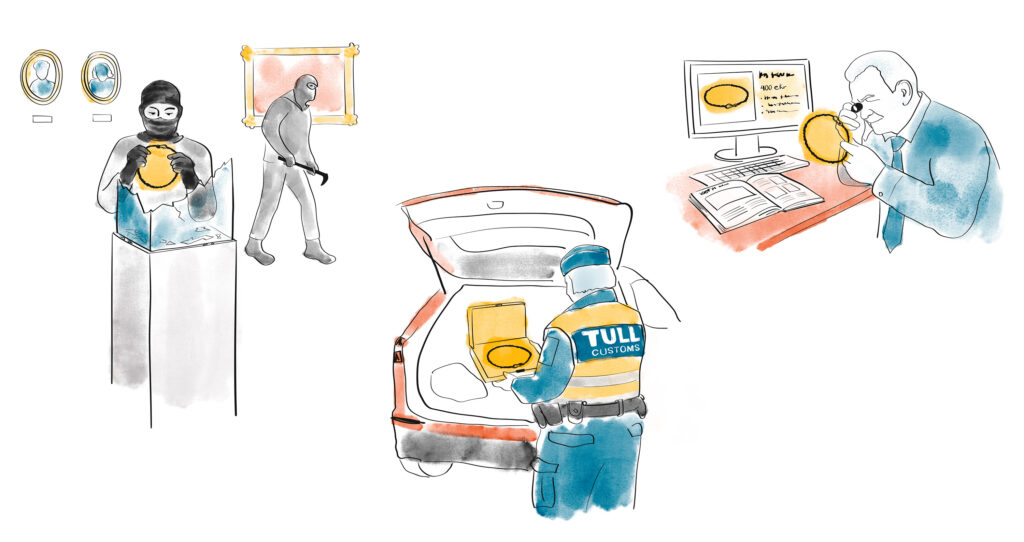
 Foto: Illustration av Matador (CC BY)
 Due diligence support for cultural heritage institutions
This document is intended to support cultural heritage institutions, both public and private, as well as non-profit organisations, in developing due diligence procedures and policy documents for the acquisition or borrowing of cultural objects.
What is due diligence?
The term due diligence is used in many fields. In a museum context, it means following good practice in the sector. This involves taking action to ensure that an object being considered for purchase, loan, exchange or donation was obtained, excavated or exported legally, and that the current owner has legal title to the object.
Due diligence should also be exercised in relation to other processes in the management of collections, such as deaccessioning and handling of restitution cases.
Why is this important?
Cultural heritage is irreplaceable’ not only for the individual state, but for mankind as a whole. Loss of cultural objects due to theft, looting and other forms of unlawful trade depletes our shared cultural heritage and violates the fundamental human rights to culture and development. For actors operating in the cultural heritage and museum sector, it is in their interest to find out as much as possible about an object or collection that is being considered for acquisition, loan or donation. Exercising due diligence to establish legal provenance means acting responsibly and transparently, both ethically and legally.
When trading cultural objects, there may be a lack of clarity on which objects are legal and which are unlawful, and they are frequently presented in a way that makes them difficult to distinguish from one another on the market. Part of this trade in cultural objects can be described as a ‘grey’ market. Many of the cultural objects on the market have incomplete provenance, or no provenance at all. Objects may have histories dating back thousands of years and may have been handled improperly – both in the past or in more recent times – in a variety of ways; in violation of national laws, for example.
Failing to carry out due diligence may pose significant risks resulting in the loss of both reputation and capital for an institution. An object that turns out to be stolen, for instance, may be recovered without financial compensation and seized by law enforcement authorities.
Failing to carry out due diligence may mean directly or indirectly supporting unlawful or unethical trade in cultural objects.
One way for cultural heritage institutions to operate ethically is to strive to achieve transparency. To achieve transparency, it is important to document the due diligence process and make information on aspects such as new acquisitions and provenance publicly available.