
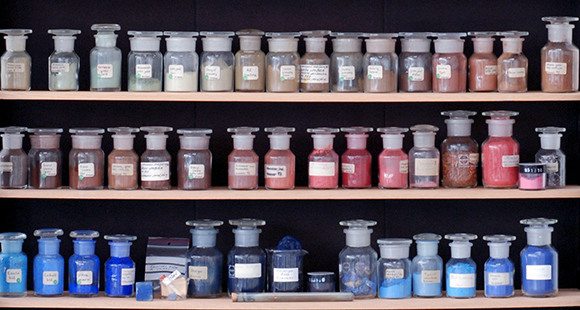
Kulturkulör – Traditional Swedish Colours
The linseed oil paint colour “Kulturkulör” was developed by the Swedish National Heritage Board and was previously sold by NCS Colour. This product has been discontinued, but you can read about traditional pigments for building conservation here.
Painters and others working with historic buildings today have an expressed need for knowledge of how to mix traditional linseed oil paint to achieve a specific colour. Kulturkulör was a tool which simplified this for anyone who wants to paint according to traditional methods.
Linseed oil paint – a Scandinavian tradition
Linseed oil paint has been used for painting wooden buildings in Scandinavia since the 17th century. Initially it was used only for architectural details and trim, since it was more expensive than other kinds of paint. As linseed oil production grew it became more common, and in the beginning of the 1900s it was commonly used even on whole facades.
After World War II new types of paints, mostly based on petroleum products, replaced the traditional linseed oil paint. The benefits of painting wood with linseed oil were forgotten, but as the movement for preserving buildings with traditional materials and techniques grew stronger the knowledge was rediscovered. Today we can once again find several producers of traditional linseed oil paint.
Traditional colour schemes
With traditional pigments you can recreate a large number of colour scales. These can be used for projects involving both historic buildings and contemporary architecture. Kulturkulör keept the knowledge about traditional building paints and colour schemes alive.
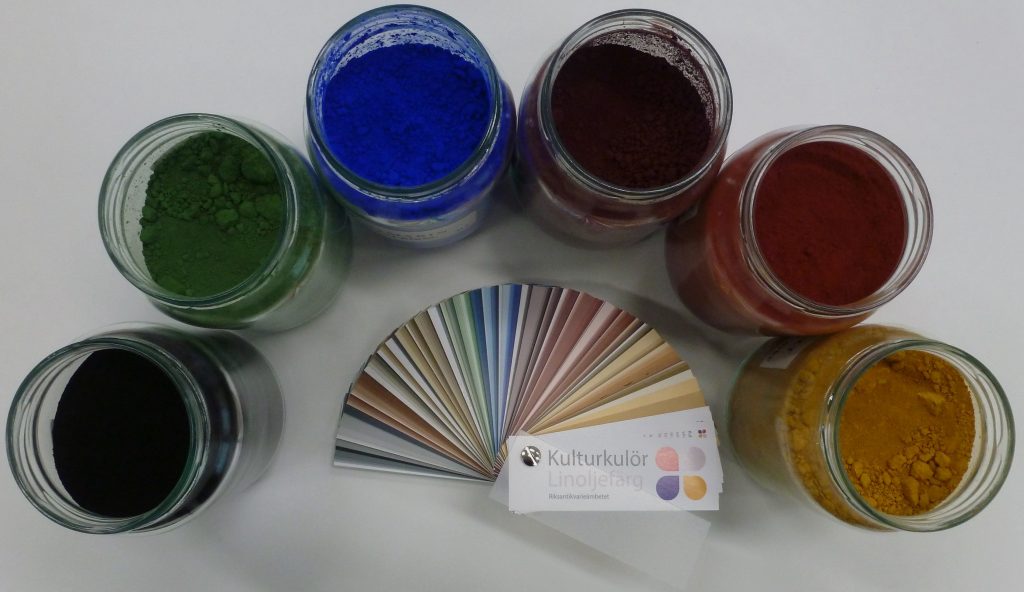
Kulturkulör could be used for different purposes, such as:
- A guide to historic colour schemes and traditional pigments
- A starting point for choosing a hue in preparation for test painting
- Recipes for mixing paint
- A tool for conversion between traditional paint recipes and NCS notations
Learn more about the pigments
Below we provide information on pigment properties such as opacity and lightfastness. You learn which colours each pigment can create and how to mix traditional linseed oil paint to achieve a specific colour.
The following images contain links to the respective pigments, follow the links to learn more about linseed oil paint and traditional colour schemes:





















